
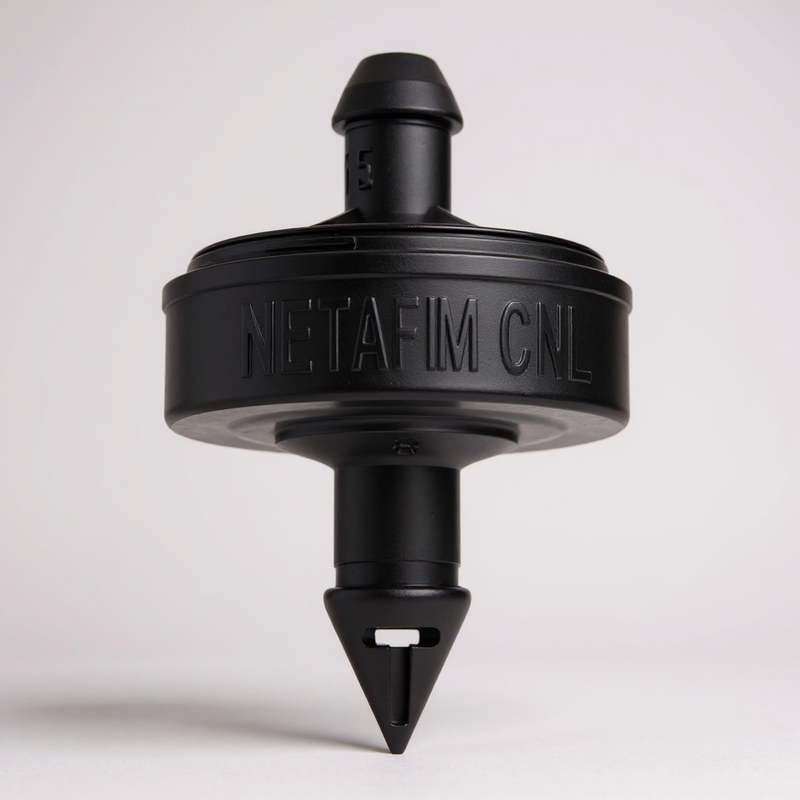
Netafim Self Piercing Pressure Compensating Emitters with Internal Check Valve - 1 GPH
Product Overview
Uneven water distribution and system drainage are the primary causes of localized dry spots and crop loss in high precision irrigation. When your emitters lack internal check valves, the entire lateral line drains at the lowest point every time the zone shuts down, leading to soggy soil in depressions and air pockets that delay water delivery during the next cycle. In the peak of the summer heat, these delays and inconsistencies can ruin turf or cause permanent wilt in nursery stock. With global supply chains remaining unpredictable, waiting until a system fails to secure your emitters is a risk to your project deadlines. Planning your inventory now ensures your crews stay on schedule and your clients receive the uniform growth they expect.
These Netafim self piercing emitters provide a distinct technical advantage over standard punch-in drippers by integrating a high pressure check valve. This internal mechanism holds water in the supply lines between cycles, preventing low point drainage and ensuring instantaneous watering across the entire run. This design significantly reduces labor costs during installation because the self piercing barb eliminates the need for separate hole punching tools on many polyethylene tubing types. By choosing a pressure compensating model with a 2.5 PSI shut off elevation, you provide your clients with a system that performs consistently on slopes and varying elevations, giving your firm a reputation for high quality, reliable engineering.
Product Specifications
| Specification | Detail |
|---|---|
| Material | High grade UV resistant plastics and silicone diaphragm |
| Flow Rate | 1.0 Gallon Per Hour (GPH) |
| Pressure Range | 10 to 45 PSI |
| Check Valve Shut Off | 2.5 PSI |
| Inlet Type | Self piercing barb for 1/4 inch tubing or direct to lateral |
| Outlet Type | Nipple for attachment of 1/4 inch distribution tubing |
| Color Code | Black body with color coded insert |
| Certifications | ISO 9261 compliant for flow and performance |
Available Models & Sizes
The Netafim pressure compensating series is available in flow rates of 0.5 GPH, 1.0 GPH, and 2.0 GPH to accommodate various soil types and plant water requirements. This specific 1.0 GPH model is sold in multi packs for bulk installation; please contact our sales team for full case quantities, volume pricing, and custom manifold configurations.
Key Features
- Internal check valve prevents line drainage and eliminates puddling at low elevation emitters.
- Self piercing barb allows for direct insertion into heavy wall polyethylene pipe without the use of a separate punch.
- Pressure compensating diaphragm maintains a constant 1.0 GPH flow rate regardless of inlet pressure fluctuations.
- Wide water passages and a continuous self flushing action prevent clogging from sediment and mineral buildup.
- Large filtration surface area ensures the emitter remains operational even in systems with high particulate loads.
- Compact profile protects the emitter from mechanical damage during seasonal maintenance or landscaping activities.
Common Applications
- Commercial landscape irrigation for high value ornamental plantings and shrubs.
- Nursery and greenhouse operations requiring precise water delivery to individual containers.
- Agricultural and crop irrigation on rolling terrain where elevation changes affect pressure.
- Municipal parks and public spaces where water conservation and runoff prevention are priorities.
- Residential lawn and garden systems for efficient foundation and perimeter plantings.
- High end estate vineyard and orchard management where uniform vine growth is essential.
Installation Notes
For best results, install these emitters using a dedicated insertion tool to ensure the barb is seated perpendicular to the lateral line. While the self piercing design allows for direct entry, ensure the polyethylene tubing is warm and flexible to prevent cracking during cold weather installs. Always flush the main supply lines before installing emitters to remove debris that could bypass the internal filtration. Check local codes for backflow prevention requirements when connecting to potable water sources. If using distribution tubing on the outlet, secure the tubing to a stabilizer stake to prevent the emitter from twisting out of the lateral line over time.